


Dear Investors,
The global pension crisis is an escalating issue with far-reaching implications.
As aging populations put increasing strain on public and private pension systems, the financial imbalances created are reshaping markets, government policies, and fiscal priorities.
Understanding the macroeconomic effects of underfunded pensions is essential for navigating these challenges. 🌍📉
Let’s explore the consequences of the pension crisis and its implications for investors and policymakers. ⏳
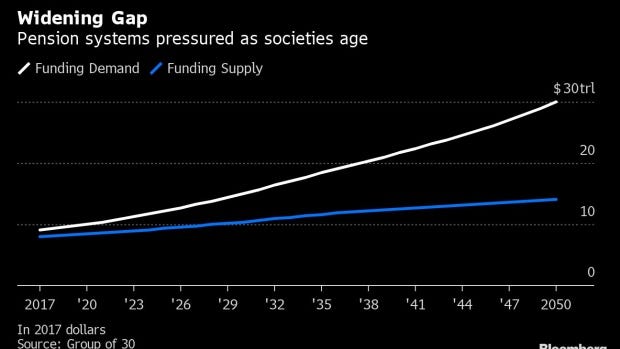
What Is the Global Pension Crisis?
Underfunded pension systems occur when the promised retirement benefits outweigh the available funding.
This imbalance is often driven by demographic shifts, such as aging populations and declining birth rates, which reduce the ratio of workers to retirees, weakening funding bases.
Additionally, low interest rates and market volatility hinder the growth of pension fund investments. 🌐📉
In 2021, the OECD estimated that global pension liabilities exceeded $78 trillion, underscoring the magnitude of the crisis. 📊
Impact on Markets
Pension funds, as major institutional investors, have significant influence on financial markets.
To close funding gaps, many funds are moving into higher-yield, higher-risk assets like private equity and infrastructure.
As payouts increase, funds may also need to liquidate assets, potentially impacting market stability. 📈📉
Fiscal Implications
Governments are grappling with the budgetary challenges posed by pension shortfalls.
To cover deficits, many nations are increasing taxes, with some projecting tax hikes of 5-10% over the next decade.
At the same time, public services may face cuts as more budgetary resources are diverted to fund pensions, creating a trade-off between supporting retirees and investing in growth. 💰📊
Labor Market Effects
The pension crisis affects employment and productivity.
Many individuals are delaying retirement, increasing labor market participation among older workers.
However, extended careers may reduce opportunities for younger workers, potentially impacting innovation and wage growth. 👷♂️📉
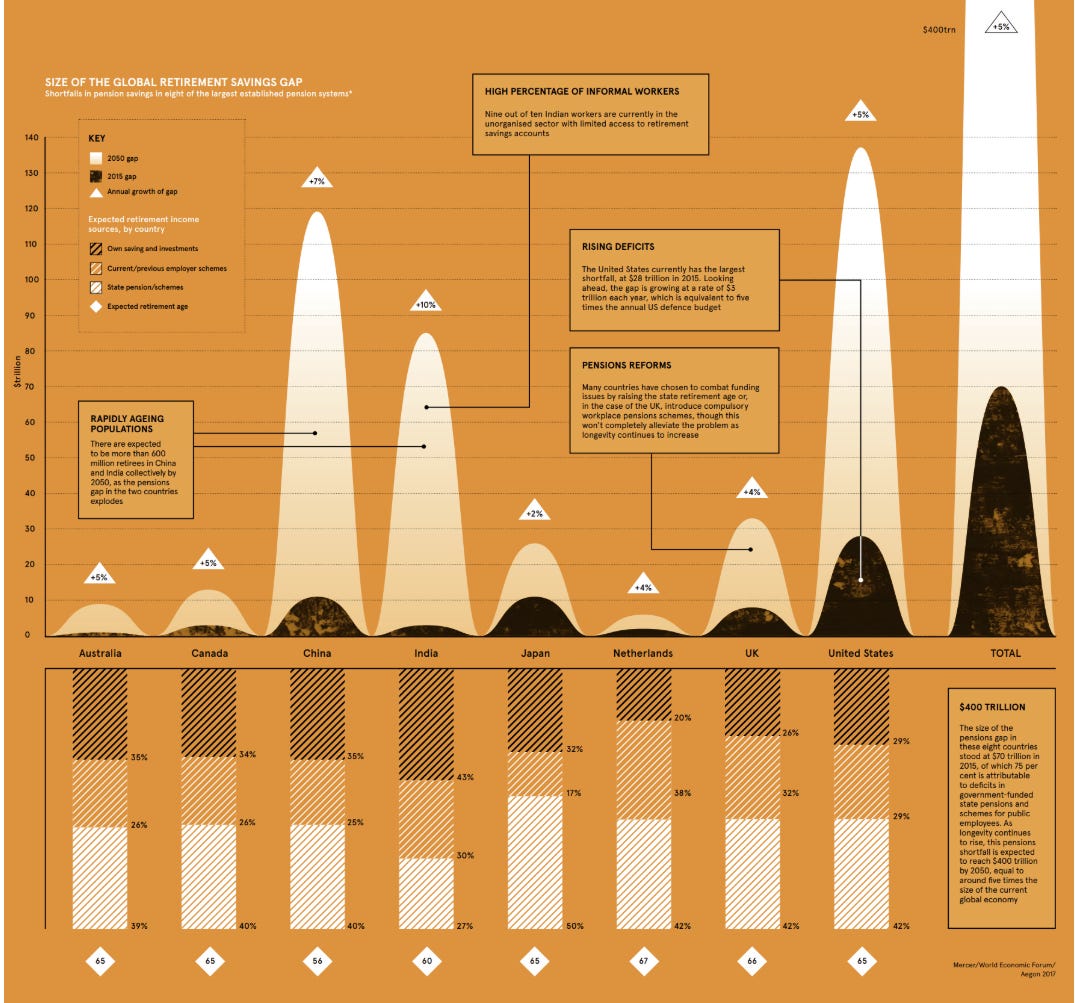
Visions of Tomorrow
The global pension crisis is likely to intensify without substantial reforms.
Raising retirement ages, adjusting benefit formulas, and increasing contribution rates are becoming common strategies.
Additionally, AI and automation may improve fund management efficiency and reduce administrative costs, while cross-border solutions and knowledge-sharing among nations could help address shared challenges. 🌍
How I’m Positioning for Pension-Driven Trends
To navigate the macroeconomic effects of the pension crisis, I focus on strategies aligned with its long-term implications.
Allocating to infrastructure investments ensures exposure to resilient sectors, while investing in companies that cater to aging populations, such as pharmaceuticals and elder care, provides growth opportunities.
Additionally, reliable income-generating assets like dividend-paying stocks hedge against fiscal uncertainties tied to pension funding. 💼📈
Monitoring government policies and demographic trends allows me to anticipate shifts and adapt my strategies effectively. 📊🚀
Bonus Lesson to Remember
The global pension crisis underscores the importance of proactive financial planning.
By understanding its dynamics, investors can better align strategies with demographic and fiscal realities. 🌍📉
For me, addressing this crisis means focusing on resilience and diversification.