


Dear Investors,
The era of rapid globalization is giving way to a new trend: deglobalization.
As nations reconfigure trade relationships and prioritize domestic production, the ripple effects on supply chains, inflation, and economic growth are profound.
Understanding the economics of deglobalization helps investors and businesses prepare for a shifting global landscape. 🌍📉
Let’s explore how deglobalization is reshaping the world economy and its implications for the future. ⏳
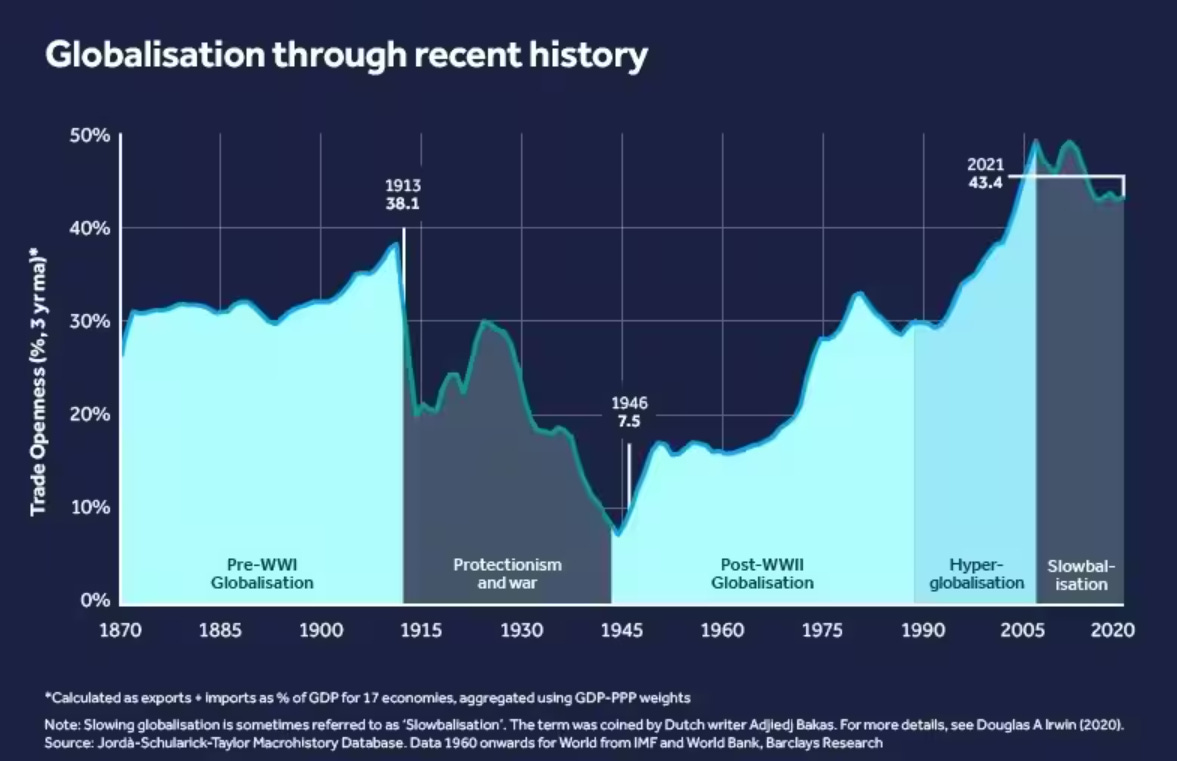
What Is Deglobalization?
Deglobalization refers to the retreat from globalization trends, marked by declining international trade, reshoring of manufacturing, and the fragmentation of global supply chains.
Key drivers include:
- Geopolitical Tensions: Rivalries among major powers, such as the U.S.-China trade war, have disrupted long-standing trade agreements.
- Supply Chain Vulnerabilities: The pandemic exposed the risks of over-reliance on global supply chains, prompting a shift toward localized production.
Impact on Supply Chains
Deglobalization has led to shorter, more localized supply chains.
While this enhances resilience, it also increases costs for businesses.
Reshoring manufacturing to the U.S. can raise production costs by up to 30%, as labor and regulatory expenses are higher than in traditional low-cost regions like Southeast Asia. 📦📊
Sectors such as semiconductors and pharmaceuticals have seen significant shifts, with governments investing billions to bolster domestic production.
The U.S. CHIPS Act, allocating over $50 billion for semiconductor manufacturing, is one such initiative aimed at reducing reliance on foreign suppliers. 🖥️💡
Inflationary Pressures
Localized production often results in higher input costs, contributing to inflation.
The diversification of supply chains away from low-cost regions disrupts the deflationary benefits of globalization.
Tariffs on Chinese goods introduced during the U.S.-China trade war added billions in costs to U.S. consumers, fueling price increases across multiple sectors.
While deglobalization reduces dependence on external markets, it challenges global price stability, especially for commodities and goods with intricate supply chains. 🌾📈
Economic Growth Dynamics
Deglobalization presents a mixed bag for economic growth.
On the one hand, investments in domestic industries can spur innovation and job creation.
On the other, reduced trade flows and higher production costs can weigh on GDP growth.
Emerging markets reliant on exports may face slower growth as global trade volumes decline.
Developed nations transitioning to domestic production could see short-term inefficiencies but foster long-term resilience.
The World Trade Organization (WTO) estimates that global trade volumes could grow by just 1% annually by 2030, compared to an average of 3% over the past two decades. 📉🌍

Visions of Tomorrow
The trend toward deglobalization is likely to persist, with significant implications for businesses and investors.
Regional trade agreements, like the Regional Comprehensive Economic Partnership (RCEP), highlight efforts to build regional trade blocs.
Advances in automation and AI may offset higher production costs, making domestic manufacturing more competitive.
🤖💼 Countries are increasingly securing critical resources, such as rare earth metals, to reduce external dependencies. 🛢️🔋
How I’m Positioning for Deglobalization Trends
To navigate the economics of deglobalization, I focus on sectors and regions poised to benefit from these shifts.
Investing in companies reshoring production, particularly in technology and healthcare, offers growth opportunities.
Increased government spending on local infrastructure supports industries like construction and materials.
🏗️📊 As nations prioritize resource independence, commodities like lithium and rare earth metals are becoming critical investments. 🌍🔋
I also monitor geopolitical developments and trade policies to anticipate market shifts. Staying informed allows for strategic adaptation in this evolving landscape. 🚀📉
Bonus Lesson to Remember
Deglobalization reminds us that economic transitions create both challenges and opportunities.
By aligning with macro trends, we can adapt to the changing dynamics of global trade and investment. 🌍📈
For me, understanding deglobalization is essential for positioning portfolios effectively.