

Dear Investors,
The Central Bank That Couldn’t Speak
When I first looked into the Turkish crisis, what struck me wasn’t the numbers – it was the silence. In early 2018, inflation in Turkey was already high, fueled by strong credit growth, rising energy prices, and a widening current account deficit. Under normal conditions, a central bank would step in, raise rates, and anchor expectations. But that didn’t happen. Why? Because President Erdoğan believed interest rates were “the mother of all evil.” And in Turkey, the central bank wasn’t truly independent. Despite mounting pressure, policymakers delayed action. Markets took notice. Investors began to price in not just inflation, but political interference. That shift in perception is subtle – but devastating. Because once the market believes the central bank has lost control, everything unravels faster. I’ve always believed that a credible central bank doesn’t need to speak loudly. But when it can’t speak at all, the silence becomes a scream.
When Confidence Breaks, Capital Flees
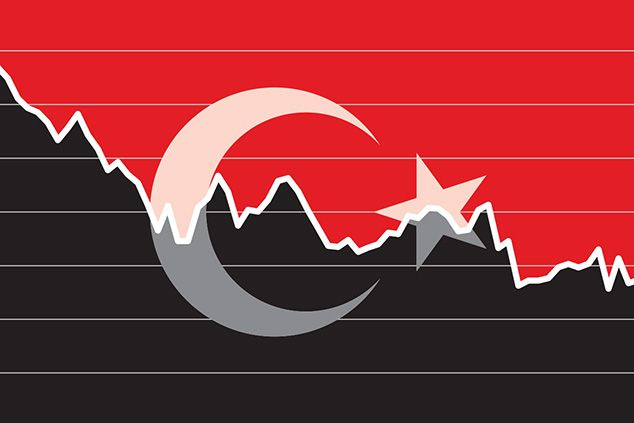
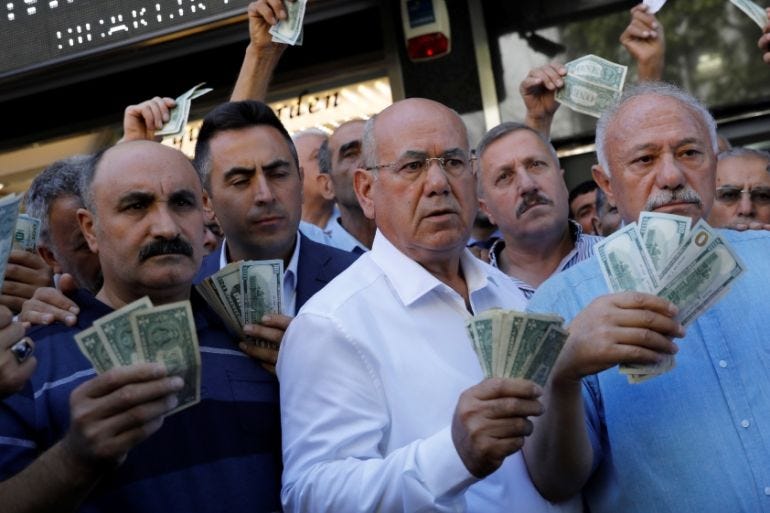
One of the biggest misconceptions in emerging markets is that policy mistakes take time to show up. Sometimes they do. But not in 2018. Once confidence cracked, capital fled. Foreign investors began dumping Turkish assets. Credit default swaps surged. The lira plummeted against the dollar. The sell-off became self-reinforcing: a weaker currency drove up import prices, which fed inflation, which further eroded real yields – prompting even more outflows. To try to contain the damage, Turkey hiked interest rates massively – from 8% to 24% in just a few months. But by then, it was too late. The market didn’t trust the response. Because when credibility is lost, rate hikes don’t stabilize – they signal panic. I remember watching that moment and thinking: this isn’t just about Turkey. This is about the cost of losing autonomy, of silencing institutions, of confusing loyalty with competence.
Why This Crisis Still Echoes Today
What makes the Turkish lira crisis so important isn’t that it was extreme – it’s that it was predictable. The signs were there: rising inflation, declining reserves, political pressure on the central bank, and inconsistent fiscal policy. But investors ignored the cracks – until they couldn’t. And that’s what I find most instructive. Because this wasn’t a random shock. It was a slow-motion build-up of pressure. The kind that’s easy to ignore when yields are high and growth looks strong. Until one day, the narrative breaks. I’ve seen similar patterns elsewhere: Argentina. South Africa. Even developed economies, at times, flirt with these dynamics when institutions weaken and messaging turns opaque. Markets might not care at first. But they always care in the end.
Final Reflection
When I think of the Turkish lira crisis, I don’t just see a collapsing currency. I see a collapsing contract – between the state, the central bank, and the market. Turkey had the tools to avoid disaster. It had a growing economy, strong demographics, and access to global markets. What it lacked was discipline. And that’s what ultimately broke the story. The myth this crisis destroyed is dangerous: that monetary policy can be bent to political will without consequence. It can’t. Not forever. Not in a world where capital is mobile, and credibility is priced in real time. For me, this was a turning point. It taught me to never analyze inflation or interest rates in isolation. I now ask: Who’s in charge? Who makes the final call? Is the institution respected – or just tolerated? Because in emerging markets – and sometimes even in developed ones – the strength of your currency is only as strong as your institutions. And once the world stops believing in your story, no interest rate is high enough to bring them back.
Market analyses you can’t miss
Why This Macro Rally Could End in a Disaster 2. Trump’s $3 Trillion Trade Shock 3. Disaster is arrived