


Dear Investors,
Sovereign wealth funds (SWFs) are becoming increasingly influential in global markets and geopolitics.
These state-owned investment funds, fueled by revenues from commodities, trade surpluses, or reserves, manage trillions of dollars and are reshaping the dynamics of global finance.
Understanding the role of SWFs helps investors anticipate market movements and navigate geopolitical shifts. 🌍💼
Let’s dive into how sovereign wealth funds operate, their macroeconomic implications, and strategies to align with their influence. ⏳
What Are Sovereign Wealth Funds?
Sovereign wealth funds are government-owned investment entities designed to manage national wealth for long-term benefits.
They often invest in a wide range of assets, including stocks, bonds, real estate, and infrastructure.
Key examples include:
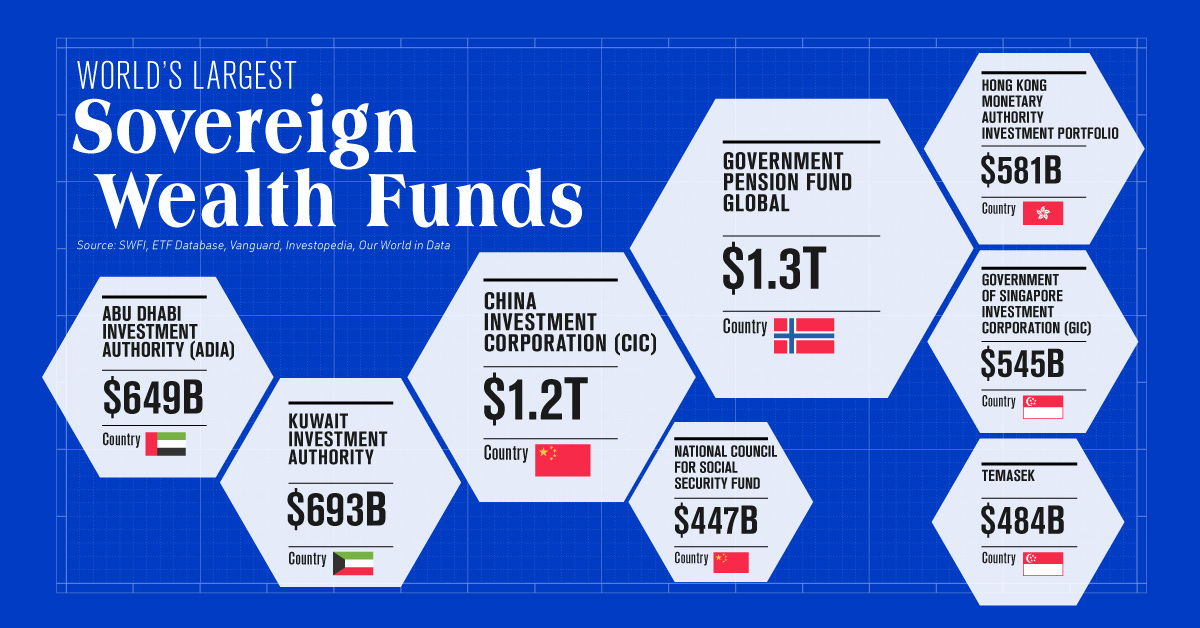
- Norway’s Government Pension Fund Global: The largest SWF globally, managing over $1.4 trillion, primarily sourced from oil revenues.
- China Investment Corporation (CIC): With over $1 trillion in assets, it reflects China’s trade surpluses and foreign reserves. 🌐
Macroeconomic Implications of Sovereign Wealth Funds
Sovereign wealth funds significantly influence global capital flows, often channeling large investments into equities, bonds, and infrastructure.
During periods of high oil prices, funds like ADIA increase their global investments, driving demand for assets and contributing to market stability. 📈
In addition to driving investments, many SWFs act as stabilizers for their domestic economies.
Norway’s fund exemplifies this by offsetting oil price volatility, supporting fiscal spending during downturns. 🛢️
SWFs also extend geopolitical influence through strategic investments in infrastructure and resources, as seen with China’s involvement in Africa’s development projects. 🌍
Challenges and Risks
Despite their strengths, SWFs face challenges:
- Heavy exposure to global markets makes SWFs vulnerable to economic downturns.
- Investments in sensitive sectors can lead to political pushback, such as scrutiny of Chinese SWF activities in the U.S. and Europe.
- Funds reliant on fossil fuel revenues face long-term risks from the global energy transition. 🌱
Visions of Tomorrow
The role of SWFs is expected to expand further as nations seek to diversify their wealth and influence.
Increasing allocations to renewable energy and ESG-compliant projects signal a pivot toward sustainability.
Similarly, a growing focus on technology sectors, including AI and biotech, reflects the pursuit of long-term returns. 🌱🔋
Emerging collaborations among SWFs to co-invest in large-scale projects across Asia and Africa may reshape regional economies. 🏗️
How I’m Positioning for SWF Influence
To align with trends driven by sovereign wealth funds, I focus on areas that attract significant SWF investment.
Infrastructure and real estate consistently receive allocations due to their stability and growth potential.
Investing in cutting-edge technology sectors aligns with SWF priorities and offers high-growth opportunities. 🚀
I also monitor geopolitical developments and SWF activities to identify shifts in capital flows and emerging market opportunities.
Staying informed allows for strategic positioning and risk mitigation. 📊🌏
Bonus Lesson to Remember
Sovereign wealth funds underscore the intersection of national wealth and global finance.
By understanding their strategies, investors can anticipate market trends and align portfolios with long-term growth opportunities. 🌍📉
For me, SWFs represent a blueprint for balancing stability and innovation.