


Dear Investors,
The Currency That Was Too Overvalued to Survive
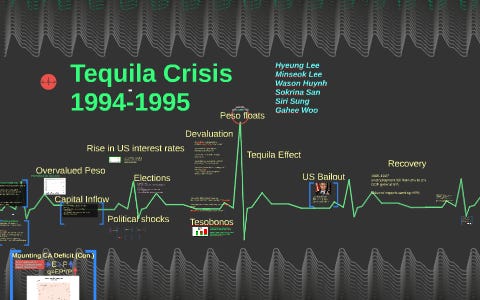
By the early 1990s, Mexico had become a poster child for market reforms. It had opened its economy, privatized major industries, attracted foreign investors, and embraced globalization. But it had also made a dangerous bet: it kept the peso pegged to the U.S. dollar, even as inflation stayed stubbornly higher than in the U.S. That meant the peso was slowly becoming overvalued, eroding Mexico’s competitiveness. Capital inflows covered the gap – until they didn’t. In March 1994, presidential candidate Luis Donaldo Colosio was assassinated. The political system, already fragile, went into shock. Investors took notice. And suddenly, what had felt like a stable currency began to look like a liability. As capital started to flee, the central bank tried to defend the peso – burning through reserves – but without the firepower or the market’s confidence. And in December 1994, just weeks after a new president took office, the government made a fateful announcement: the peso would be allowed to float. It sank – violently.
When One Country’s Crisis Becomes Everyone’s Problem
The peso’s collapse wasn’t just a domestic event. It sent shockwaves through the entire region. Investors began selling assets across Latin America. Argentina, Brazil, and even countries in Asia felt the spillover. Why? Because the market stopped seeing “Mexico” and started seeing “emerging markets.” Risk became indiscriminate. And the narrative turned from “great reform story” to “fragile and unstable.” The U.S., afraid of both economic contagion and a wave of migration, stepped in with an unprecedented $50 billion rescue package, coordinated with the IMF and other institutions. It wasn’t just about helping Mexico – it was about saving the credibility of emerging market finance. I remember studying that moment and thinking: it took years to build investor trust in Mexico – and just days to lose it.
The Myth of Market Immunity
The Tequila Crisis shattered a dangerous illusion: that political events and economic reforms are separate. They’re not. Mexico had made impressive economic strides – but investors ignored how shallow some of its institutions still were. How volatile its politics remained. And how vulnerable a fixed exchange rate system is when backed by hope rather than reserves. To me, this crisis taught one of the most painful truths in macro: markets reward reform narratives – until they don’t. And when perception flips, fundamentals often matter less than momentum. I’ve seen this pattern repeat again and again: a country wins foreign capital with a powerful story, a charismatic leader, a liberalization agenda. But when the story breaks – because of elections, scandals, assassinations, or policy chaos – the outflows are faster than the inflows ever were.
Final Reflection
When I think back to the Tequila Crisis, I don’t just see a peso collapse. I see a confidence collapse – a sudden, brutal end to a narrative that had seemed unstoppable. Mexico did the right things on paper. But it underestimated how fragile belief really is in macro finance. And that’s the real myth this crisis killed: That economic openness alone is enough to guarantee stability. It’s not. Stability is a dance between credibility, communication, and policy coherence. Lose one, and you risk losing the rest. Since then, I always ask myself: is the country I’m analyzing telling me a story – or showing me resilience? Are the institutions strong – or just temporarily in favor? Is the capital structure sustainable – or dependent on momentum? Because in global macro, a great story is never enough.
Market analyses you can’t miss
Why This Macro Rally Could End in a Disaster 2. Trump’s $3 Trillion Trade Shock 3. Disaster is arrived