
Dear Investors,
Reflexivity in Action: Markets Shape Fundamentals
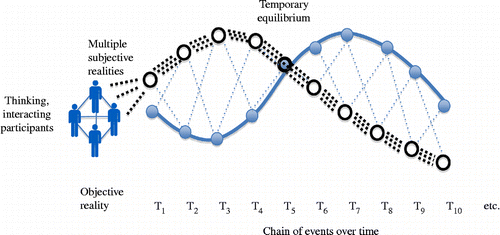
Most traditional economics assumes a clear boundary between reality and perception. In theory, fundamentals drive asset prices. But Soros challenged this. He argued that in financial markets, perception affects reality – because people act on their beliefs. When investors believe something, they act on it. Their collective action changes prices. Those price changes, in turn, affect the real economy – corporate valuations, borrowing costs, business confidence. Which then feeds back into perceptions. It’s a circular process, not a linear one. This reflexive feedback loop is what allows markets to overshoot – and crash. One of the best examples is the real estate boom leading up to the 2008 financial crisis. Investors believed housing prices would always rise. That belief led banks to lend aggressively, fueling demand and pushing prices higher. Those rising prices “confirmed” the original belief, attracting more capital. But the fundamentals – income growth, household debt – couldn’t keep up. When the perception finally cracked, the entire system collapsed. In Soros’s view, this wasn’t a failure of the market. It was how markets work. And if you can understand when the loop is self-reinforcing – and when it breaks – you gain a massive strategic edge.
The Soros Mindset: Thinking in Paradoxes
What fascinated me most about Soros wasn’t just his trades – it was how he thought. He wasn’t searching for perfect knowledge. He embraced uncertainty. He often said, “I’m only rich because I know when I’m wrong.” That humility allowed him to change direction faster than most – and profit before others even realized something was broken. One of his most famous trades illustrates this perfectly: the 1992 short of the British pound, which made Soros over $1 billion in a single day. The trade wasn’t based on deep conviction in the fundamentals of the UK economy. It was based on the belief that the UK couldn’t sustainably defend its currency peg within the European Exchange Rate Mechanism. Soros sensed that the government’s credibility was brittle, and that once the market realized it, a feedback loop would accelerate the collapse. He didn’t just anticipate a breakdown – he caused it. That’s reflexivity. When I studied this event in depth, I realized that Soros wasn’t just trading markets. He was trading belief systems, credibility, and crowd psychology. It reminded me that markets are not rational machines – they’re complex social organisms. And that gave me a new lens through which to view volatility.
How I Apply Reflexivity in Real Time
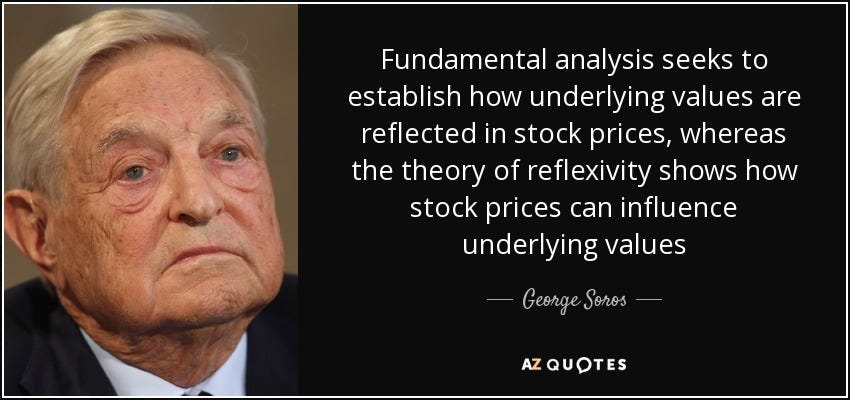
This mindset changed how I interpret price action today. When markets rise sharply on weak data, I no longer dismiss it as irrational. I ask: Is this a reflexive loop forming? Is optimism feeding optimism? Or is the market front-running a narrative shift that will eventually shape the fundamentals? In 2020, for example, I watched tech valuations explode while unemployment was surging. Old models said it made no sense. But reflexivity said otherwise. Liquidity injections, fiscal transfers, and a belief in the “new digital economy” became self-fulfilling. Capital flowed, valuations rose, and companies grew into their prices – at least for a while. In emerging markets, reflexivity often appears through capital flows. Investors pull money out because of perceived risk. That selling drives currency weakness, which worsens inflation, which makes the perception of risk real. A vicious loop. Understanding these loops doesn’t guarantee profit – but it keeps you from being blindsided. It teaches you that in macro, timing is everything – and psychology is half the game. Now, whenever I build a thesis, I ask two questions:
What’s the fundamental story? 2. What’s the perception loop around it?
If both are aligned, I have high conviction. If they diverge, I wait – or fade the crowd.
What This All Means
Soros didn’t just teach us how to profit.
He taught us how to think. He taught us that markets are not objective observers – they are active creators of reality.
They reflect the hopes, fears, biases, and actions of millions of participants. And sometimes, those beliefs become so powerful, they bend reality itself.
Find a reflexive loop in today’s market. Is AI hype becoming self-fulfilling? Are bond markets reinforcing recession fears? Is the U.S. consumer narrative based on data – or on momentum?
Look for the perception – and ask yourself whether it’s strong enough to reshape the fundamentals.
Next Sunday, we’ll step into the mindset of another macro legend – Stanley Druckenmiller – and see why conviction, not diversification, has often been the key to outperformance.