


Dear Investors,
In this final installment of “Macro Mistakes,” we explore the Asian Financial Crisis of 1997, a crisis that swept across Southeast Asia, triggering sharp currency devaluations and severe economic recessions.
This event offers valuable lessons about the dangers of currency mismatches, speculative capital flows, and the need for sound financial regulation.
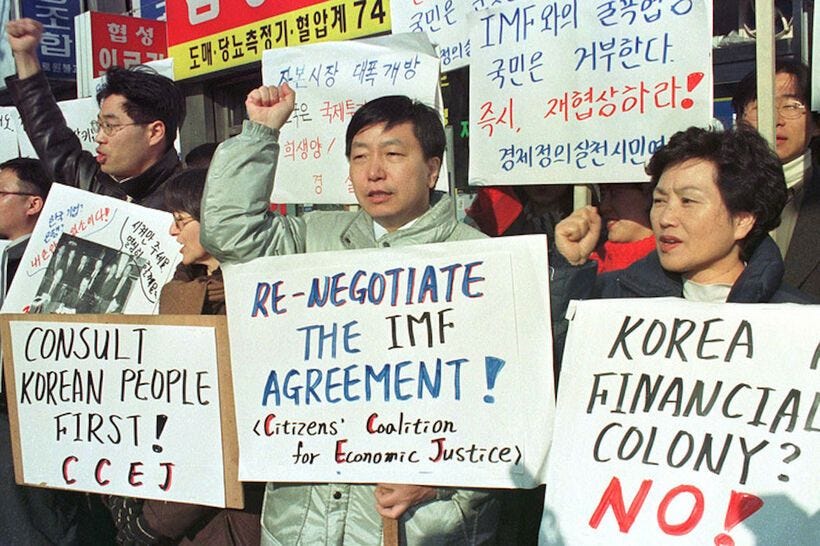
Throughout the early 1990s, Southeast Asian economies experienced rapid economic growth, fueled by foreign investment and booming exports.
Countries like Thailand, Malaysia, Indonesia, and South Korea became known as the “Asian Tigers.”
These nations attracted vast amounts of foreign capital, particularly into real estate and infrastructure projects.
However, much of this foreign capital was short-term and speculative.
Many of these countries maintained fixed exchange rates against the U.S. dollar, which created a sense of stability but also masked underlying vulnerabilities.
As capital inflows surged, asset prices – particularly real estate – skyrocketed, and many Southeast Asian economies became heavily dependent on external funding to finance their growth.
By 1996, cracks began to appear.
Economic growth was slowing, and speculative bubbles in real estate and stock markets were starting to form.
In 1997, a series of speculative attacks on the Thai baht forced Thailand’s central bank to abandon its fixed exchange rate.
The baht’s sharp devaluation triggered a wave of panic, and investors began pulling their money out of other Southeast Asian countries.
As currencies across the region collapsed, foreign debt – much of which was denominated in U.S. dollars – became unsustainable.
Indonesia, Malaysia, and South Korea were hit particularly hard, and their economies plunged into deep recessions.
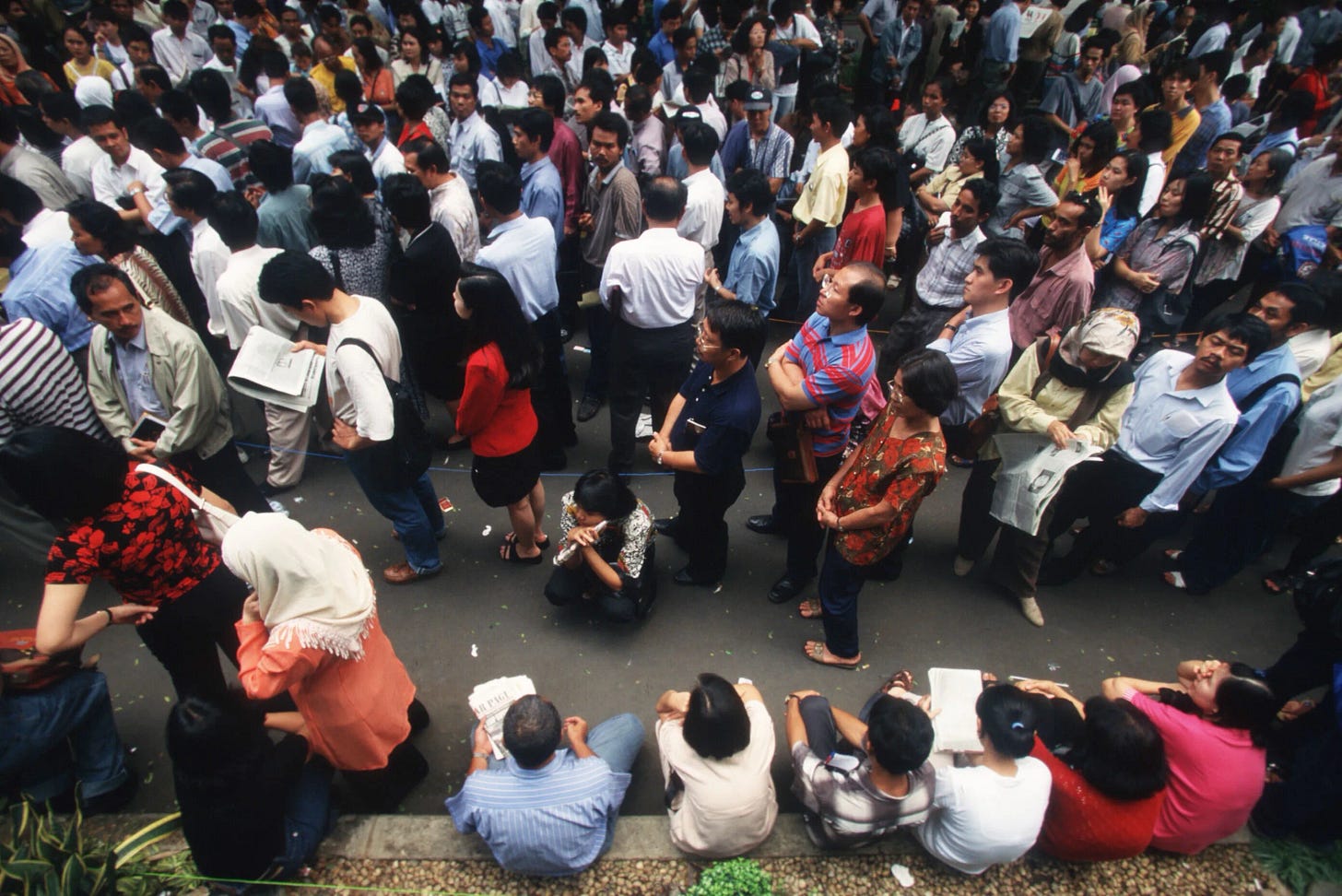
By the end of 1997, the region was in full-blown crisis, with millions of people losing their jobs and livelihoods.
The Macro Mistake
The Asian Financial Crisis was driven by several key macroeconomic mistakes, including currency mismatches and over-reliance on speculative capital:
- Currency mismatches: Many Southeast Asian countries borrowed heavily in foreign currencies, particularly U.S. dollars, while generating revenues in their local currencies. When their currencies devalued, the cost of servicing foreign-denominated debt soared, pushing many companies and governments into insolvency.
- Speculative capital flows: The region attracted significant amounts of speculative capital, much of which was short-term. When investor confidence faltered, this capital fled the region, leading to sharp currency devaluations and a liquidity crisis.
- Weak financial regulation: Many of the region’s financial systems were poorly regulated, with inadequate oversight of bank lending practices. This allowed speculative bubbles to form and left financial institutions highly exposed to currency and credit risks.
The Macro Lesson
The Asian Financial Crisis provides several critical macroeconomic lessons:
- Currency mismatches can be dangerous: Borrowing in foreign currencies while generating revenues in local currencies creates significant risk. When exchange rates shift, the cost of servicing foreign-denominated debt can become unsustainable.
- Speculative capital flows are volatile: Relying on short-term foreign capital to fuel growth can create vulnerabilities. When investor sentiment changes, this capital can quickly flee, leading to sharp currency devaluations and financial instability.
- Sound financial regulation is essential: Weak financial regulation and oversight can allow bubbles to form and expose the economy to significant risks. Ensuring that financial institutions are adequately regulated can help prevent crises from spiraling out of control.
The Asian Financial Crisis had far-reaching economic and social consequences.
Indonesia, Thailand, and South Korea experienced deep recessions, with GDP contracting by over 10% in some cases.
Unemployment soared, and millions of people were pushed into poverty.
In response to the crisis, the International Monetary Fund (IMF) stepped in with bailout packages, but these came with strict austerity measures that further deepened the economic pain.
Governments were forced to restructure their financial systems, implement fiscal reforms, and liberalize their economies to restore investor confidence.
The crisis also led to greater financial cooperation in the region, including the establishment of the Chiang Mai Initiative, a multilateral currency swap arrangement designed to provide liquidity support in future crises.
Macro Bonus
Investors who recognized the risks of currency mismatches and speculative capital flows were able to reduce their exposure to Southeast Asia before the crisis hit.
Additionally, those who understood the potential for a currency devaluation contagion were better positioned to navigate the extreme volatility that followed.
The lessons from the Asian Financial Crisis remain relevant for emerging markets that rely heavily on foreign capital or have significant levels of foreign-denominated debt.
The Asian Financial Crisis serves as a powerful reminder of the dangers of currency mismatches, speculative capital flows, and the need for sound financial regulation.